reMastered: Jac Lahav’s Record Paintings
A curatorial project for Mana Contemporary featuring the works of artist Jac Lahav
September 1, 2025 – March 1, 2026
Open House: October 19, 2025, 12 PM to 6 PM
Mana Contemporary, 888 Newark Avenue Jersey City, NJ
ARTSY | WORKS LIST | PRESS RELEASE | ARCHIVE WALL MAP
Artist Talk
November 12, 12pm EST (virtual)
Recording now available
What music did Francis Bacon listen to? What were the listening habits of Georgia O’Keeffe? What was the first illustrated record album? What does a Russian bootleg of Sonic Youth have to do with Gerhard Richter? Find out in this virtual artist talk by Jac Lahav and curator Michele Jaslow to discuss their new show reMastered at Mana Contemporary.
Featured Press
Art Daily reMastered: Jac Lahav’s Record Paintings Presented by Mana Contemporary
The Art Gorgeous Vinyl Is Back, Baby: How Jac Lahav Turns Album Covers Into Fine Art
Art Spiel reMastered at Mana Contemporary
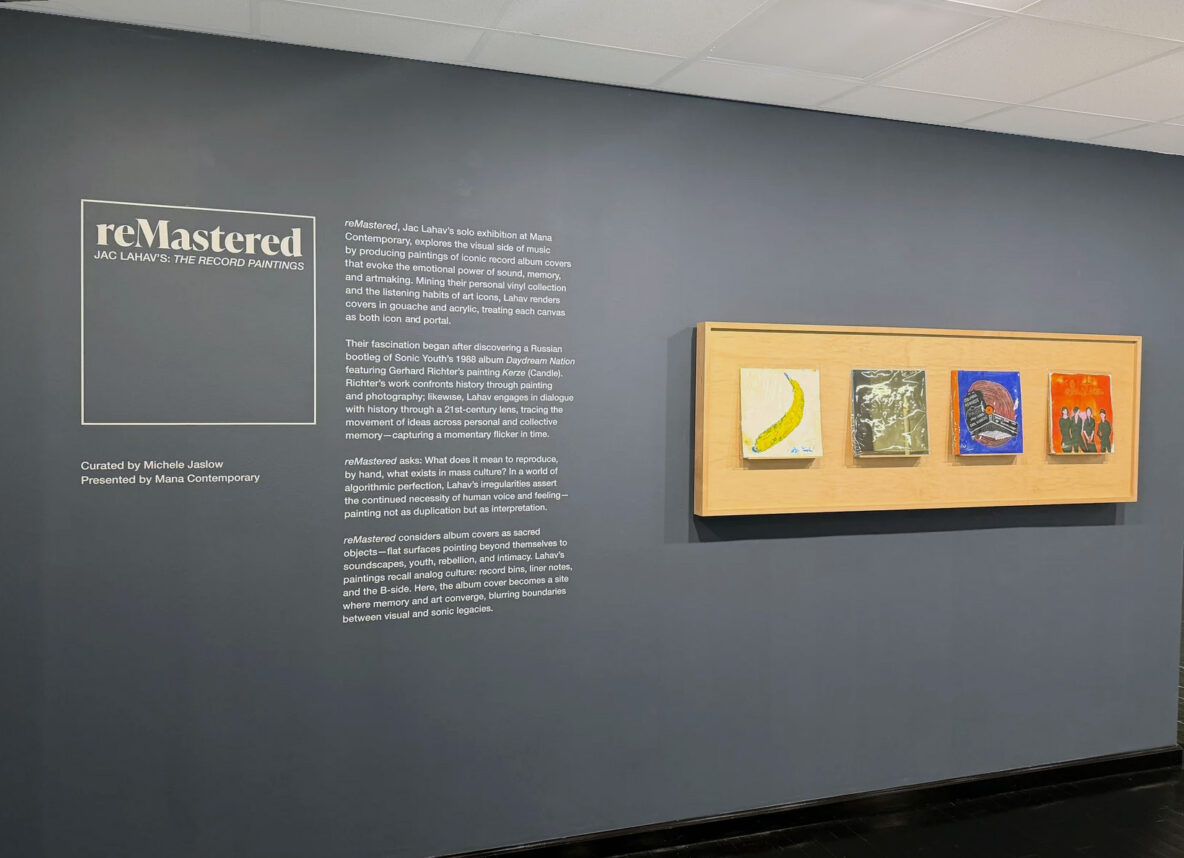
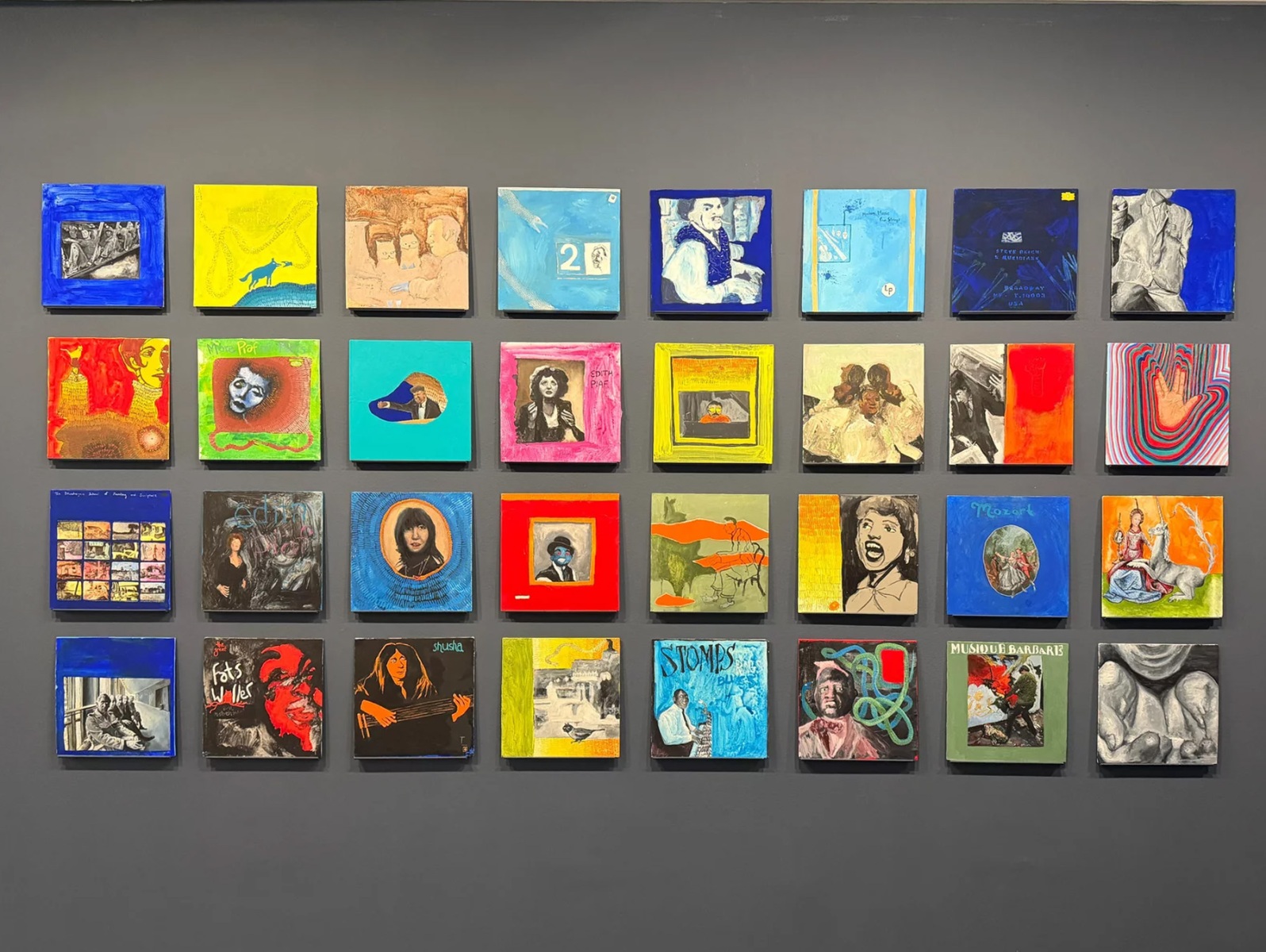
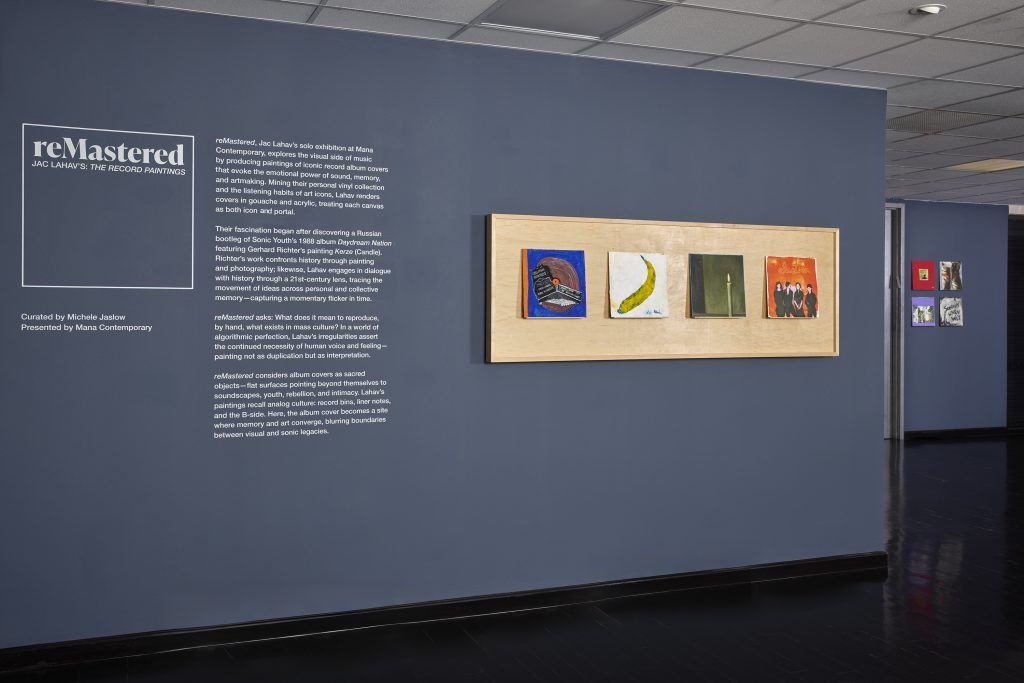
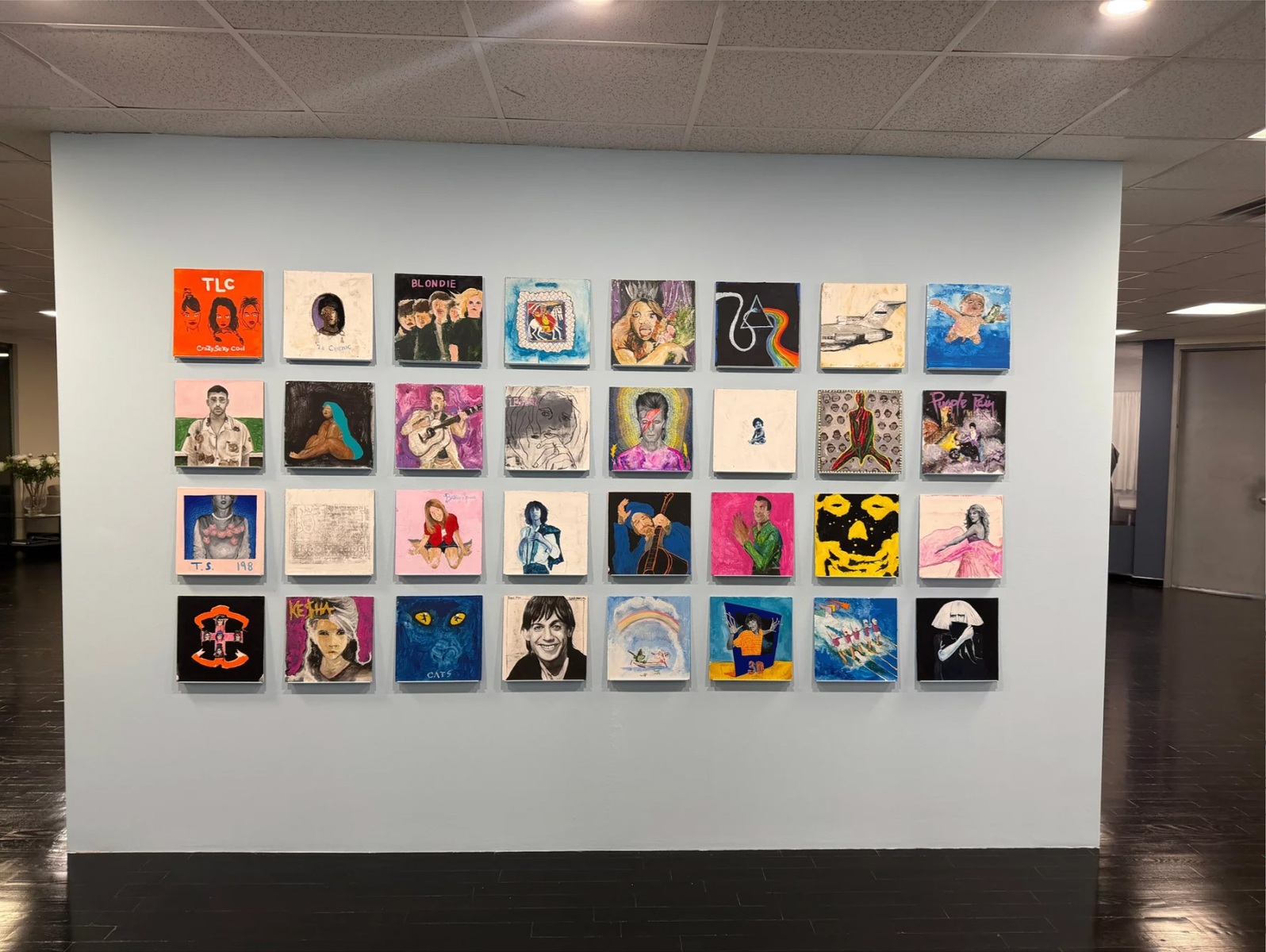
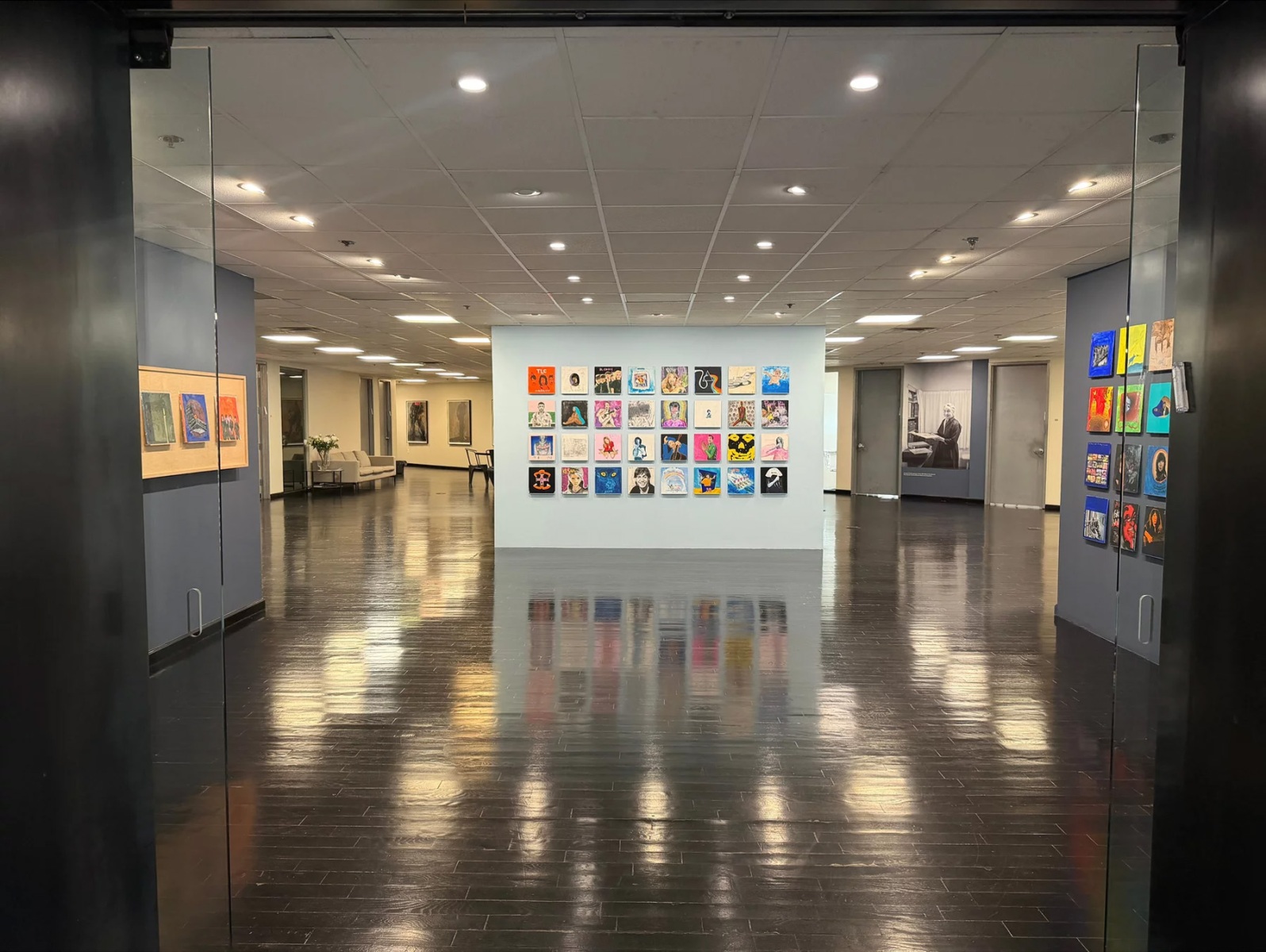
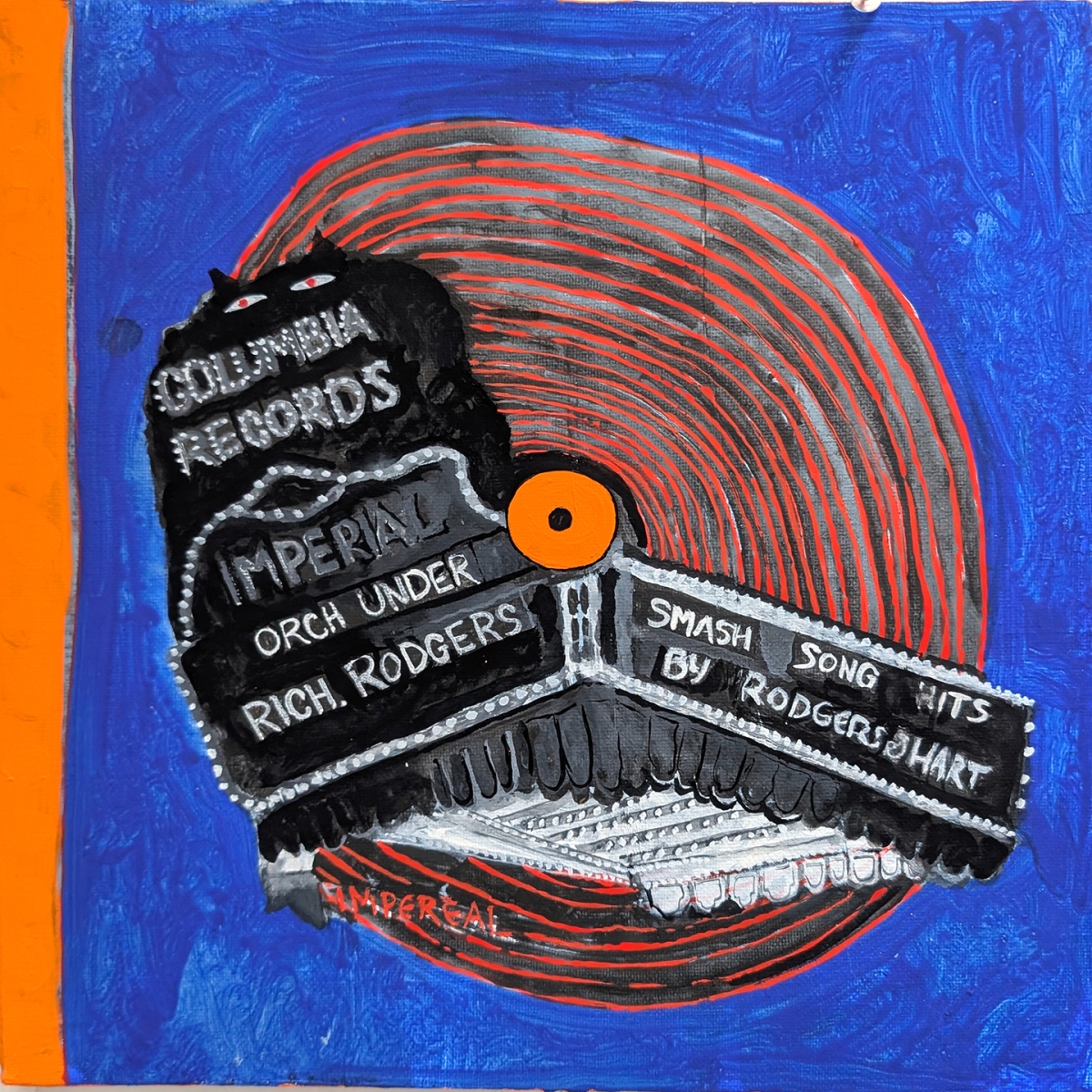
reMastered, Jac Lahav’s solo exhibition at Mana Contemporary, mines vinyl record collections to produce paintings of iconic album covers that explore the emotional power of music, memory, and the act of artmaking.
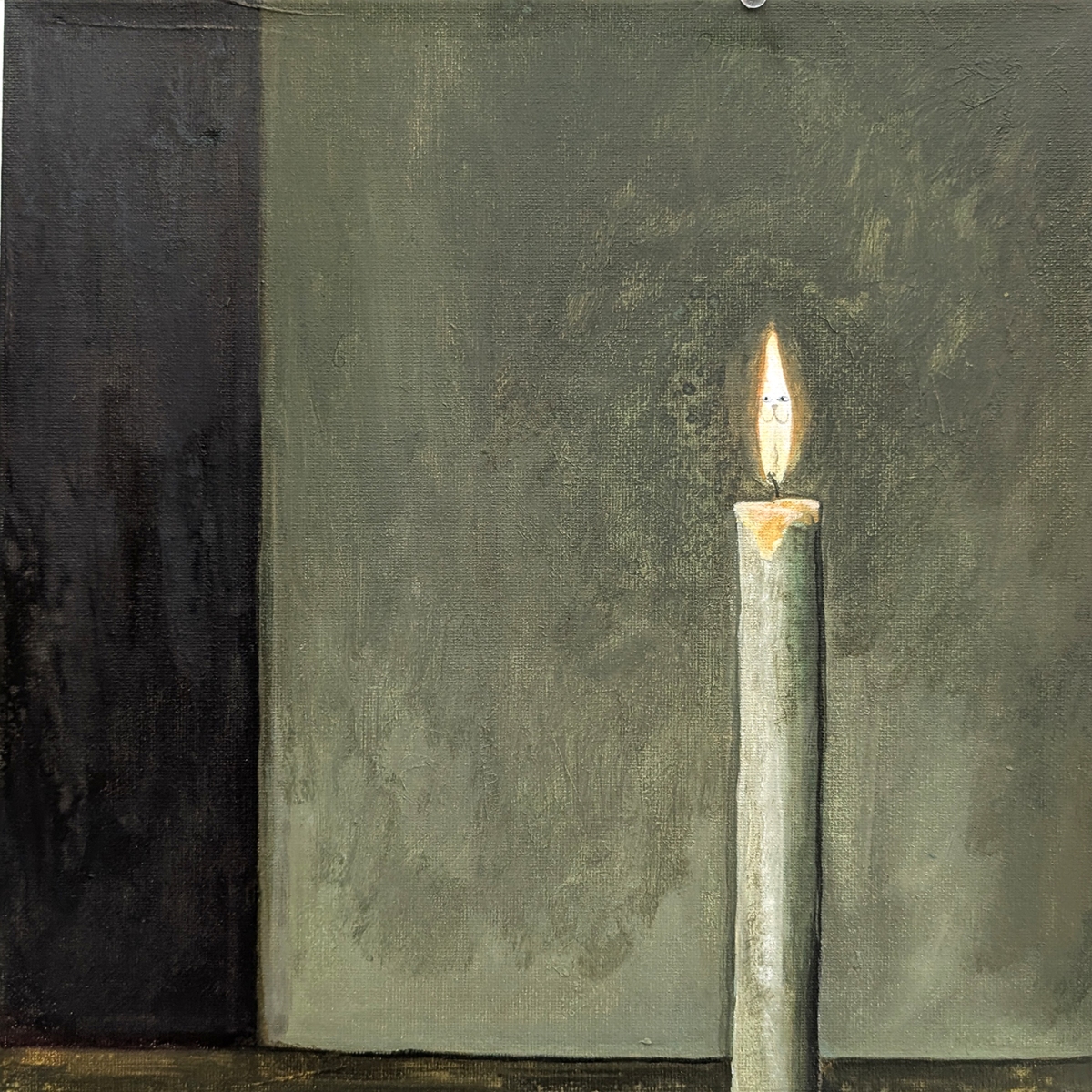
Inspiration for these paintings began with Lahav’s deep dive into their own music collection. Lahav became fascinated with vinyl after discovering a Russian bootleg of Sonic Youth’s iconic 1988 album Daydream Nation, which features the artist Gerhard Richter’s painting Kerze (Candle) on the cover. Richter’s work confronts history through a fusion of painting and photography. Similarly, Lahav’s work engages in a back-and-forth dialogue with history through a 21st-century lens, exploring the exchange of ideas in both personal and collective pasts, capturing a fleeting flicker in time.
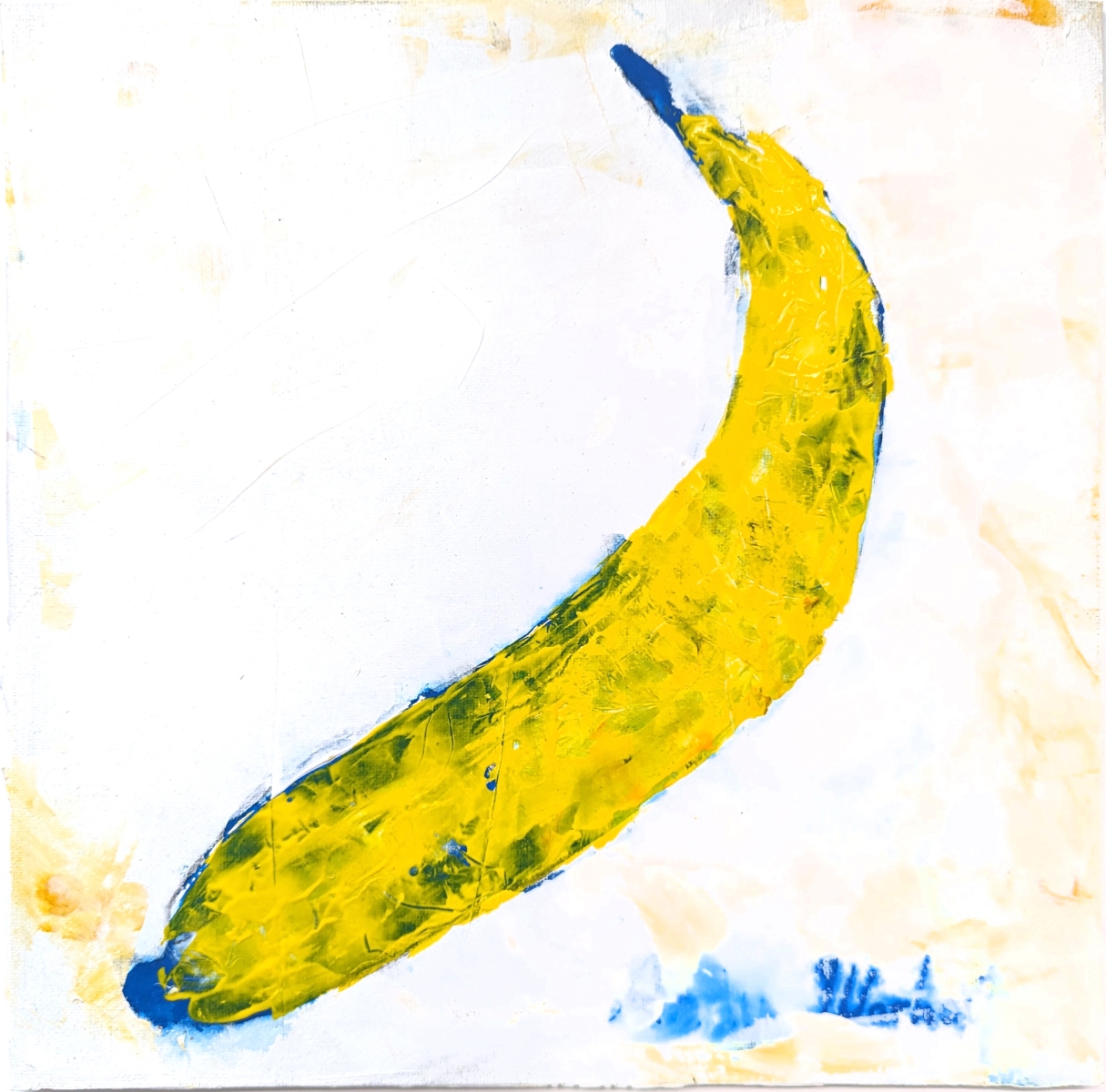
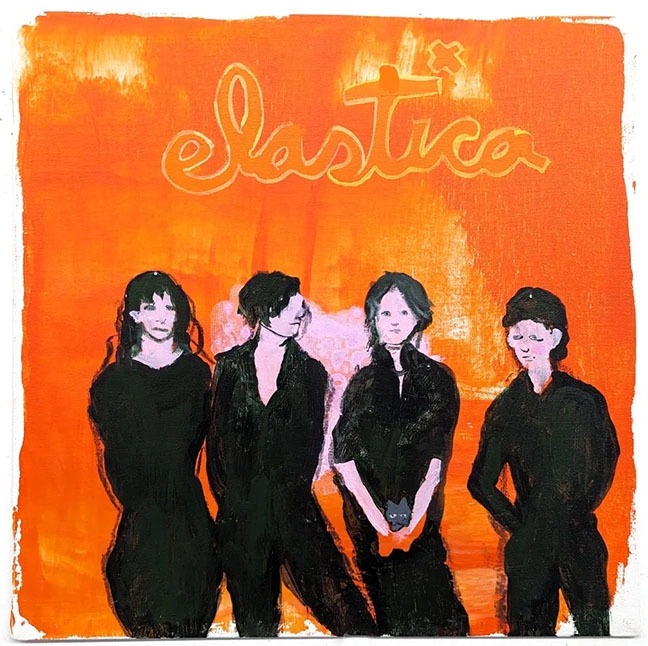
Lahav’s Record Painting series—12” x 12” gouache and acrylic paintings on canvas—delves into the sentimental realm of their connection with music through an art practice that celebrates albums that have profoundly resonated with the artist and the broader collective consciousness. This intersection of personal experience, artistic expression, and shared memory fuels the multi-faceted exchange between audience and viewer in this exhibition.
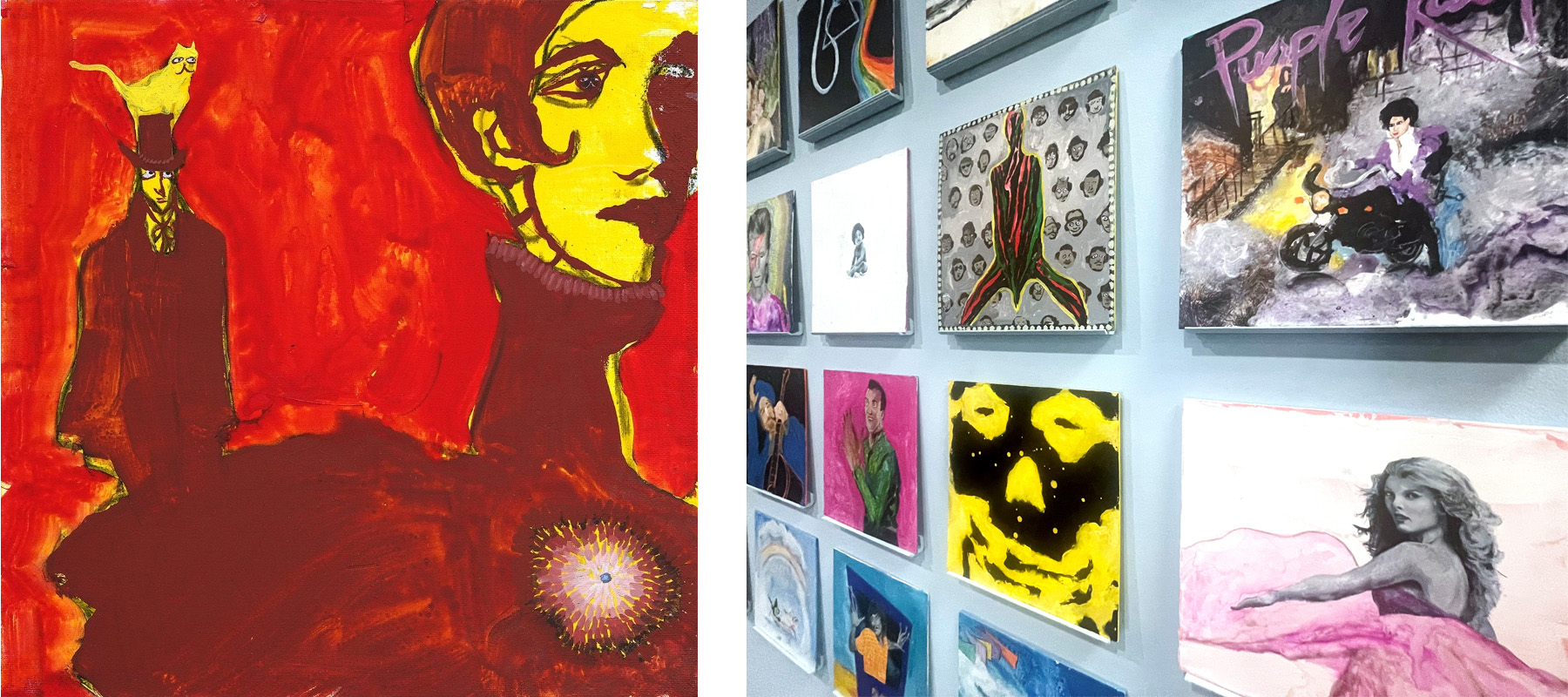
Iconic visual artists are not only art historical giants, but also known music lovers. Left to Right: Proust Remembrance and section of reMastered: Jac Lahav’s Record Paintings.
Lahav considers each album cover a kind of icon—in the Russian Orthodox sense—a flattened image that points beyond itself to a sacred reality. The album cover is a surface, a two-dimensional representation, but beneath that surface it is four-dimensional, using time as a variable. Lahav’s work considers not only the album sleeve, but the music, the sound, and the era it occupied in our lives. This extends into deeper memory triggers. As Lahav recounts:
“Listening to Digital Underground in my car in high school. Losing my virginity to Elastica. My first Public Enemy tape, *Fear of a Black Planet*, gifted to me by my sister when I was twelve.”
These memories are trench-deep—embedded in image, sound, and sensation.
The term record album itself is revealing. Originally, it referred to a portfolio—a bound collection of sleeves, like a photo album or scrapbook. Album art, as we know it today, wasn’t introduced until the late 1930s. Yet for many of us—especially those raised in the 1980s or earlier—album covers were treasure chests. In a pre-digital world, a new record wasn’t just about the music. It came with liner notes, photography, cryptic thank-you lists, and artwork that we studied late at night in our bedrooms. We memorized liner notes like sacred texts. It was the opposite of today’s infinite scroll. When you bought a record, you lived with it. For a certain generation, that connection has only deepened with age.
The exhibition at Mana Contemporary encourages interaction, giving audiences space to reflect on their personal connections to music. To further support this discovery and memory-triggering experience, the exhibition includes record bins—like those found in every record store—allowing visitors to browse select limited edition prints of Lahav’s paintings. This physical, tactile experience enables viewers to connect with a detail in a painting they can hold in their hands, or to discover a new album altogether. It also recalls a time when record stores were central to musical discovery, and album cover imagery was key to a record’s visibility.

(Left to right): Jac Lahav painting Sonic Youth’s iconic 1988 album Daydream Nation, which features the artist Gerhard Richter’s painting Kerze (Candle), David Bowie (Aladdin Sane), and Lizzo (Cuz I Love You).
Lahav’s series is also a layered investigation of cultural memory, artistic authorship, and the shifting role of visual media. Each painting is a reproduction, yes—but also a transformation. Through gesture, texture, and stylistic interpretation, Lahav explores what it means to paint something iconic and widely embraced, and how that process can reveal something deeply human.
reMastered also follows the artist’s curiosity by exploring the record collections of iconic visual artists—Jackson Pollock, Lee Krasner, Francis Bacon, Georgia O’Keeffe, Adrian Piper, Sol LeWitt, Karel Appel, and Dan Flavin. These figures are not only art historical giants, but also known music lovers. As Lahav explains:
“I’m fascinated by not only the artwork these artists made, but by what they listened to. What records did they own? What music filled their homes and studios?”
Lahav mines the archives of these artists to uncover the music they collected and listened to, collaborating with institutions such as the Pollock-Krasner House and Study Center and the Francis Bacon Estate to delve into the connection between visual art and sound. The initial inspiration came from Jackson Pollock’s significant jazz collection. Pollock’s paintings have often been described as visual improvisations, and one can easily imagine him flinging paint while immersed in the expressive freedom of jazz.
In Pollock’s case, though, the connection may have been more emotional than immediate—his studio had no record player; the stereo was kept in the main house he shared with Lee Krasner. Interestingly, many of the 78s in their collection lacked illustrated sleeves—they were raw sound, without the mediated layer of cover art. Legacy also plays a role: many of the illustrated albums in the archive actually belonged to Krasner and were purchased after Pollock’s death.
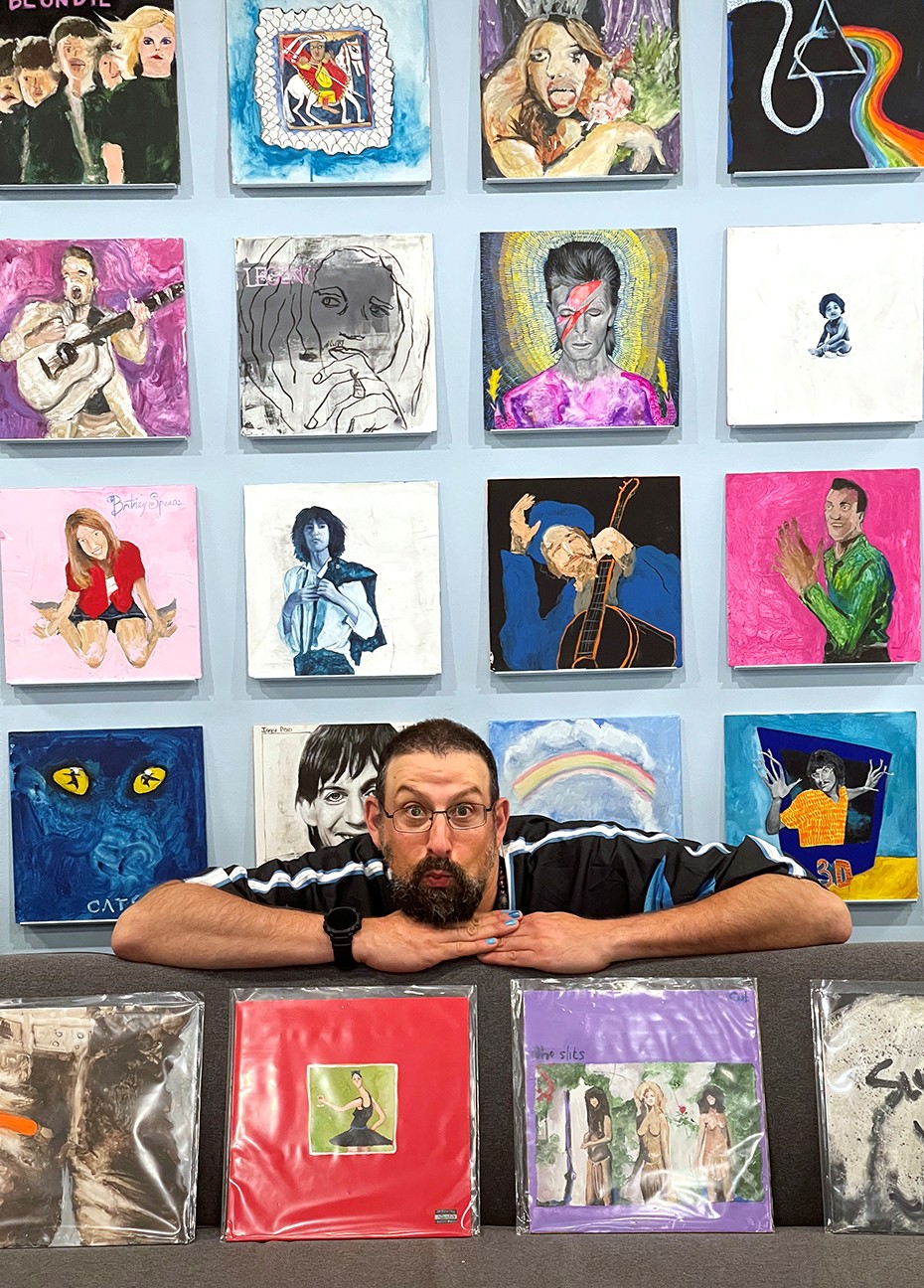
Jac Lahav
“Some of these artists, like Bacon or O’Keeffe, left behind physical records or detailed lists of their listening habits sometimes overlapping with musicians like Edith Piaf. Others, like Adrian Piper, simply pointed to time-stamped musical histories.”
Whether or not these albums directly influenced their palettes or compositions, their presence places an important pin on the map of art history, allowing a contemporary painter like Lahav to navigate forward and build a new lexicon of cultural material.
Each of Lahav’s paintings carries the weight of nostalgia, music, and artistic expression—transporting viewers to an analog oasis in a digitally focused world. In this age of infinite media and pixel-perfect reproductions, reMastered poses a central question: why do artists still paint? What is the purpose of painting in a world dominated by flawless digital imagery? Lahav addresses this directly:
“In my studio, I approach this question through painterly means: thick daubs of acrylic paint, realist gouache, gestural charcoal mark-making, and sometimes absurd flourishes like strange figurative cats or eerily smooth monochromes. I treat each album as a visual puzzle—one that lets me explore the limits and freedoms of style. Over time, certain patterns in my work emerge—not only stylistic signatures, but emotional rhythms. The act of analog reproduction becomes a method of self-discovery. Even when painting someone else’s image, my voice comes through in the ways I alter, simplify, exaggerate, or reinvent visual language.”
ABOUT THE ARTIST
Jac Lahav JAC LAHAV (b. 1977 : he/them) is a contemporary American artists whose work employs a wide range of media to explore themes of art history, individual and shared cultural identities, personal narratives, psychology, materiality, familial structures, and the internet culture.
Lahav’s work focuses on traveling museum exhibitions with solo shows at Richmond Art Museum Indiana, Longview MFA Texas, Saginaw Art Museum Michigan, Florence Griswold Museum Connecticut, Lahav’s work can be found in multiple public collections including the Jewish Museum Milwaukee, Mount Holyoke Art Museum, Jewish Museum NY among others. Recent solo exhibitions include the Slater Art Museum, Norwich (Summer, 2023) and the Lyman Allyn Art Museum, New London (Fall, 2023).
Rauschenberg Foundations, CT Humanities, CT Office Of The Arts, Community Foundation, Virginia Commission for the Arts and the National Endowment for the Arts are among some of the institutions who have supported Lahav’s work through grants and exhibition funding. jaclahav.com
ABOUT MANA CONTEMPORARY
Mana Contemporary is a multidisciplinary arts center with locations in Jersey City, Chicago, with the Mana Common Headquarters in Miami. Dedicated to celebrating the creative process, Mana provides a platform for artists, collectors, curators, and institutions to connect and collaborate across disciplines. manacontemporary.com
ABOUT THE CURATOR
Michele Jaslow is a Brooklyn based independent art curator, writer, and appraiser with a background in institutional collaborations curating thought-provoking artists that engage diverse audiences. Michele holds an MFA Cranbrook, BFA Purchase, and post-graduate NYU New Media. Michele recently co-founded arts hub ThinkFiner (thinkfiner.com). It’s initial effort, Digital Twin, is a digital based series aimed at a fresh perspective with current exhibitions based in New York, Loire Valley, and Budapest. It’s a bit about the light in different coordinates and a bit about fighting against our collective swipe and scroll habit. more…